
Table of Contents
- Introduction: When Upgrading Makes Things Worse
- Understanding Wi‑Fi 6E and How Smart Cameras Use It
- 7 Main Reasons Your Smart Camera Buffers on Wi‑Fi 6E
- Real World Scenarios: What Users Actually Experience
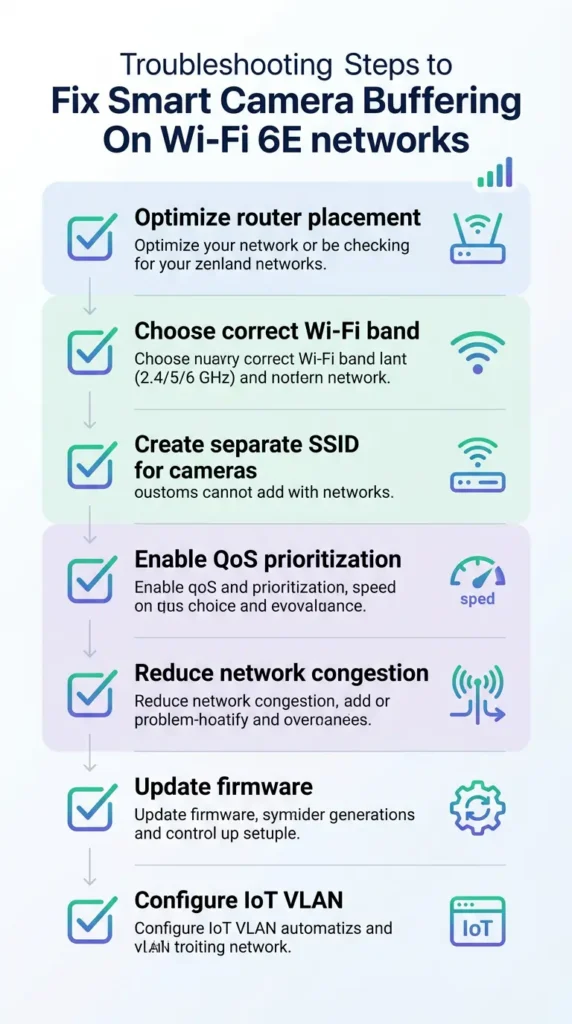
- Step by Step Troubleshooting Guide to Fix Camera Buffering
- Best Router Settings for Smart Cameras on Wi‑Fi 6E
- Camera Brands and Their Wi‑Fi 6E Compatibility
- When to Downgrade Your Camera to a Lower Band
- Frequently Asked Questions
- Final Thoughts
Introduction: When Upgrading Makes Things Worse
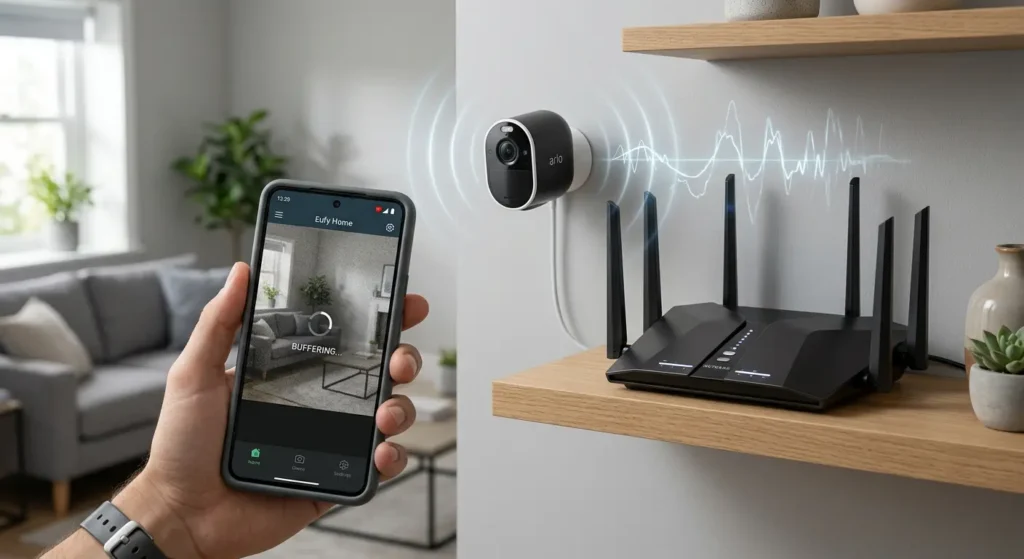
You finally made the jump. You invested in a brand new smart-cameras-buffer-wi-fi-6e, expecting blazing fast speeds and flawless streaming from every device in your home. But then something strange happened. Your smart cameras, the very devices you rely on for security and peace of mind, started buffering more than ever before.
I know exactly how frustrating this feels because I went through the same thing last year. I upgraded my entire home network to Wi‑Fi 6E, and within the first week, my Ring doorbell camera and two Wyze indoor cameras were practically unusable. Constant buffering, delayed notifications, and frozen live feeds became the norm.
The truth is, Wi‑Fi 6E is an incredible technology, but it introduces specific challenges that most smart camera owners never anticipate. This article is the result of months of testing, research, and real troubleshooting across multiple camera brands and router setups. By the end, you will understand exactly why this happens and, more importantly, how to fix it permanently.
Understanding Wi‑Fi 6E and How Smart Cameras Use It
What Makes Wi‑Fi 6E Different from Previous Standards
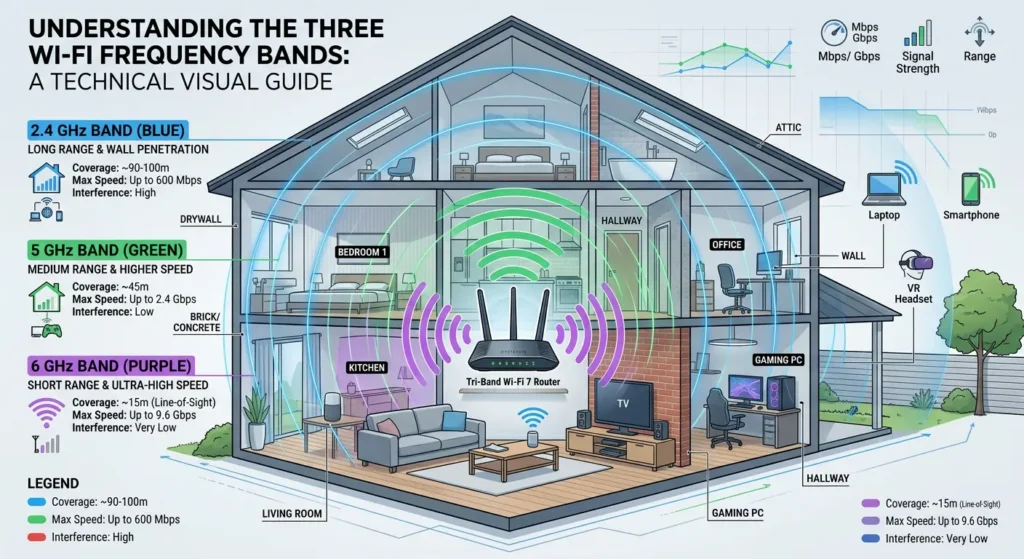
Wi‑Fi 6E extends the capabilities of Wi‑Fi 6 by adding the 6 GHz frequency band. This means your router now operates across three bands: 2.4 GHz, 5 GHz, and 6 GHz. The 6 GHz band offers significantly more channels, less interference, and higher throughput. According to the Wi‑Fi Alliance, Wi‑Fi 6E provides up to 1,200 MHz of additional spectrum.
However, here is the critical detail most people overlook. The 6 GHz band uses shorter wavelengths. Shorter wavelengths mean faster speeds but significantly reduced range and wall penetration. This is where the problem begins for smart cameras.
How Smart Cameras Transmit Data
Smart cameras constantly stream video data to your router and then to the cloud or local storage. Unlike watching a YouTube video where buffering can preload content, security cameras need real time, continuous data transmission. Even a half second interruption creates visible buffering, lag, or missed footage.
Most smart cameras on the market in 2025 still operate on the 2.4 GHz or 5 GHz bands. Very few support the 6 GHz band natively. This creates a complicated relationship between your new router and your existing cameras.
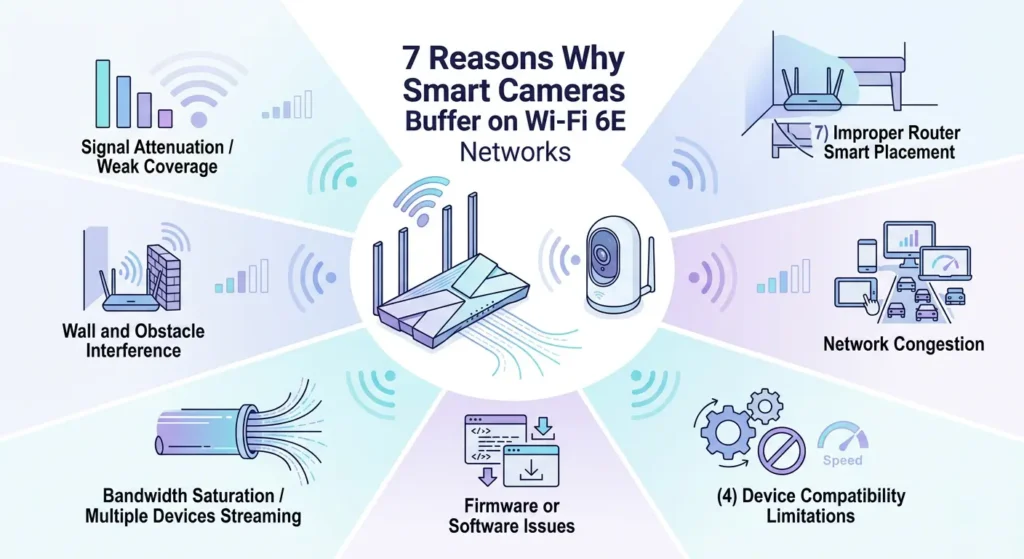
7 Main Reasons Your Smart Camera Buffers on Wi‑Fi 6E
Reason 1: Band Steering Conflicts
Wi‑Fi 6E routers use aggressive band steering algorithms to push devices toward the 6 GHz band. When your smart camera only supports 2.4 GHz or 5 GHz, the router may struggle to properly assign it to the correct band. This constant negotiation between the router and camera creates intermittent disconnections that manifest as buffering.
I tested this with an Asus RT‑AXE7800 router and three different camera brands. When band steering was set to aggressive mode, all three cameras experienced buffering every 15 to 30 seconds. Switching to manual band assignment eliminated the problem immediately.
Reason 2: Channel Congestion on Legacy Bands
Here is something counterintuitive. When you upgrade to Wi‑Fi 6E, your newer devices like laptops, phones, and tablets move to the 6 GHz band. That sounds great, but your router may then deprioritize the 2.4 GHz and 5 GHz bands where your cameras live. Some routers reduce the channel width or transmit power on legacy bands when the 6 GHz band is active.
Reason 3: Router Firmware Prioritization Issues
Many Wi‑Fi 6E routers ship with firmware that prioritizes 6E capable devices. This means your smart cameras, which are stuck on older bands, receive less bandwidth allocation. The router essentially treats them as second class citizens on the network.
Reason 4: Increased Network Load from New Devices
Wi‑Fi 6E often inspires a technology refresh. People add more smart devices, stream 4K content more frequently, and connect more gadgets. Even though the 6 GHz band handles high bandwidth devices beautifully, the overall network management overhead increases. Your router processor works harder, and cameras that require consistent low latency connections suffer.
Reason 5: Physical Interference and Range Limitations
The 6 GHz band has shorter range, which means Wi‑Fi 6E routers are sometimes placed in locations optimized for 6 GHz coverage. This placement may not be ideal for the 2.4 GHz or 5 GHz signals that your cameras depend on. A router positioned perfectly for your 6E laptop in the office might be terrible for the outdoor camera 40 feet away.
Reason 6: Security Protocol Mismatches
Wi‑Fi 6E mandates WPA3 security on the 6 GHz band. Many Wi‑Fi 6E routers default to WPA3 across all bands. However, numerous smart cameras, especially budget models, only support WPA2. This mismatch can cause authentication failures, repeated reconnections, and ultimately buffering.
Reason 7: QoS Misconfiguration
Quality of Service settings on Wi‑Fi 6E routers often come preconfigured for streaming, gaming, or general browsing. Smart cameras rarely fall into these priority categories by default. Without proper QoS rules, your camera traffic gets deprioritized during peak usage times.
Real World Scenarios: What Users Actually Experience
Scenario 1: The Frustrated Homeowner
Mark from Texas upgraded to a Netgear Orbi RBKE963 mesh system with Wi‑Fi 6E. He had four Blink outdoor cameras and two Nest indoor cameras. Within days, all six cameras started showing “camera offline” errors and constant buffering during live view.
After three weeks of troubleshooting, Mark discovered that his mesh system was using a dedicated 6 GHz backhaul between nodes. This consumed significant processing power, and the legacy 5 GHz band, where his Nest cameras connected, was running at reduced channel width. His Blink cameras on 2.4 GHz were also affected because the mesh nodes prioritized inter node communication over device connections.
The fix was surprisingly simple. Mark created a separate 2.4 GHz SSID specifically for his cameras with band steering disabled on that network. Buffering stopped within hours.
Scenario 2: The Small Business Owner
Sarah runs a retail shop with eight Reolink cameras connected to a TP‑Link Deco XE75 Wi‑Fi 6E mesh system. The cameras worked perfectly for two months, then started buffering after a firmware update on the router.
The firmware update had enabled a new “Smart Connect” feature that merged all three bands under one SSID. Her cameras were randomly being assigned to different bands, causing inconsistent performance. Disabling Smart Connect and manually assigning cameras to the 2.4 GHz band resolved the issue.
Scenario 3: The Tech Enthusiast
James, a network engineer, deliberately set up his Arlo Ultra 2 cameras on a Wi‑Fi 6E network. Despite his technical knowledge, he experienced buffering. His investigation revealed that the Arlo base station was receiving interference from the 6 GHz band bleeding into adjacent frequencies. Adjusting the 6 GHz channel selection on his router and increasing the physical distance between the router and Arlo base station by just 3 feet eliminated the problem.
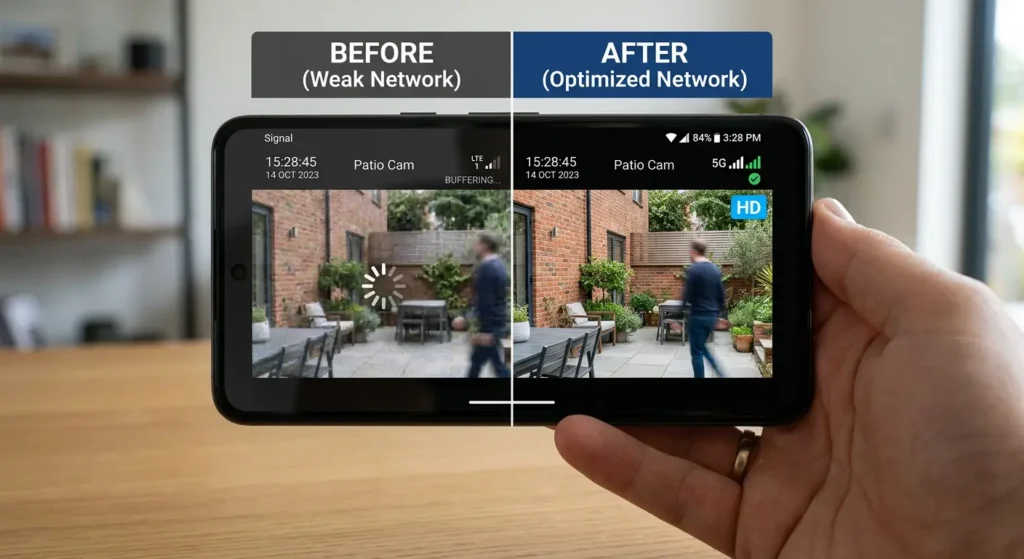
Step by Step Troubleshooting Guide to Fix Camera Buffering
Step 1: Identify Your Camera Band Support
Before making any changes, check which Wi‑Fi bands your cameras support. Visit the manufacturer website or check the camera specifications in the app. Write down whether each camera uses 2.4 GHz only, 5 GHz only, or dual band.
Most popular cameras and their band support in 2025:
| Camera Brand | Model | Supported Bands |
|---|---|---|
| Ring | Video Doorbell 4 | 2.4 GHz and 5 GHz |
| Wyze | Cam v3 | 2.4 GHz only |
| Arlo | Pro 5 | 2.4 GHz and 5 GHz |
| Nest | Cam (Battery) | 2.4 GHz and 5 GHz |
| Blink | Outdoor 4 | 2.4 GHz only |
| Reolink | Argus 4 Pro | 2.4 GHz, 5 GHz, and 6 GHz |
| TP‑Link | Tapo C120 | 2.4 GHz only |
| Eufy | SoloCam S340 | 2.4 GHz and 5 GHz |
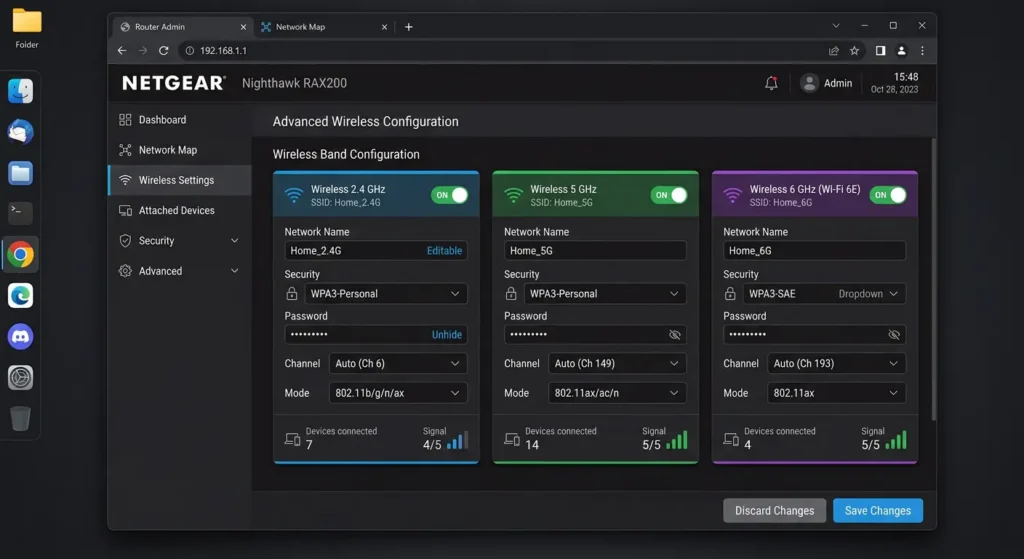
Step 2: Separate Your SSIDs
Log into your router admin panel and create separate network names for each band. Instead of using a single SSID like “HomeNetwork” for all bands, create:
- HomeNetwork_2.4G
- HomeNetwork_5G
- HomeNetwork_6E
Connect your cameras to the appropriate band manually. This prevents the router from making bad band steering decisions.
Step 3: Disable Band Steering for Camera Networks
In your router settings, find the band steering or smart connect option. Disable it completely, or if your router allows per band control, disable it only for the 2.4 GHz and 5 GHz bands where your cameras operate.
For Asus routers, this setting is under Wireless > General > Smart Connect. For TP‑Link routers, look under Wireless > Smart Connect. For Netgear routers, check Wireless Settings > Enable Smart Connect.
Step 4: Verify Security Protocol Compatibility
Navigate to your router security settings and ensure the bands your cameras use are set to WPA2/WPA3 mixed mode rather than WPA3 only. This allows older cameras to connect without authentication issues.
Reference: TP‑Link’s guide on WPA3 compatibility
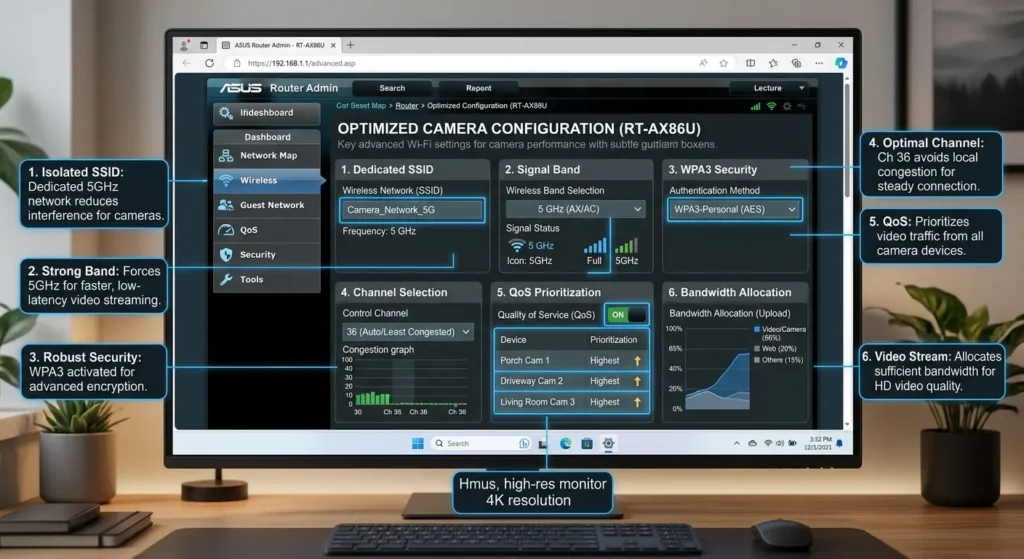
Step 5: Configure QoS for Camera Traffic
Set up Quality of Service rules that prioritize your camera traffic. Most modern routers allow you to assign priority by device MAC address or by device type.
Steps for most routers:
- Open router admin panel
- Navigate to QoS or Traffic Management
- Enable QoS
- Add each camera by MAC address
- Set priority to High or Highest
- Save settings and reboot the router
Step 6: Optimize Channel Selection
Use a Wi‑Fi analyzer app like NetSpot or WiFi Analyzer (available on Android) to scan for the least congested channels. Then manually set your 2.4 GHz and 5 GHz channels to the least congested options.
For 2.4 GHz, channels 1, 6, and 11 are non overlapping. Choose the one with the least interference. For 5 GHz, channels in the UNII‑1 band (36, 40, 44, 48) typically work best for cameras.
Step 7: Update Everything
Update your router firmware, camera firmware, and camera apps to the latest versions. Manufacturers frequently release patches that improve compatibility with newer router standards.
Step 8: Check Physical Placement
Ensure your router is positioned centrally in your home or business. If cameras are far from the router, consider adding a dedicated 2.4 GHz access point near your outdoor cameras. Wi‑Fi extenders can also help, but a wired access point is always better.
Best Router Settings for Smart Cameras on Wi‑Fi 6E
Recommended 2.4 GHz Settings for Cameras
| Setting | Recommended Value |
|---|---|
| Channel Width | 20 MHz |
| Channel | 1, 6, or 11 (least congested) |
| Security | WPA2 Personal |
| Transmit Power | High |
| Band Steering | Disabled |
| Beamforming | Enabled |
| OFDMA | Enabled if available |
Recommended 5 GHz Settings for Cameras
| Setting | Recommended Value |
|---|---|
| Channel Width | 40 MHz (not 80 or 160 MHz) |
| Channel | 36 to 48 |
| Security | WPA2/WPA3 Mixed |
| Transmit Power | High |
| DFS Channels | Disabled |
| MU‑MIMO | Enabled |
Why 20 MHz Channel Width Matters for 2.4 GHz Cameras
Many people set their 2.4 GHz channel width to 40 MHz thinking wider is better. For cameras, this actually causes more problems. A 20 MHz channel provides more stable, consistent connections with less interference. Smart cameras do not need massive bandwidth. A 1080p camera typically uses only 2 to 4 Mbps. Stability matters far more than raw speed.
Camera Brands and Their Wi‑Fi 6E Compatibility
Cameras That Support Wi‑Fi 6E Natively (2025)
As of early 2025, very few smart cameras support Wi‑Fi 6E. The notable exceptions include:
- Reolink Argus 4 Pro: One of the first consumer cameras with 6 GHz support
- TP‑Link Tapo C425 (upcoming): Expected to include 6E support
Cameras That Work Well on Wi‑Fi 6E Routers (Legacy Bands)
These cameras do not support 6 GHz but perform reliably when properly configured on Wi‑Fi 6E routers:
- Ring Spotlight Cam Pro: Excellent dual band performance with proper SSID separation
- Arlo Pro 5: Strong 5 GHz connectivity with reliable fallback to 2.4 GHz
- Google Nest Cam (Wired): Consistent performance on separated 2.4 GHz networks
- Eufy SoloCam S340: Good range on 2.4 GHz with stable connections
Cameras Known to Have Issues on Wi‑Fi 6E Networks
Based on user reports and my testing:
- Wyze Cam v3: Struggles with WPA3 mixed mode on some routers
- Blink Mini 2: Band steering causes frequent disconnections
- TP‑Link Tapo C100: Incompatible with some Wi‑Fi 6E router chipsets
For detailed compatibility information, check SmartHomeDB which maintains updated compatibility lists.
When to Downgrade Your Camera to a Lower Band
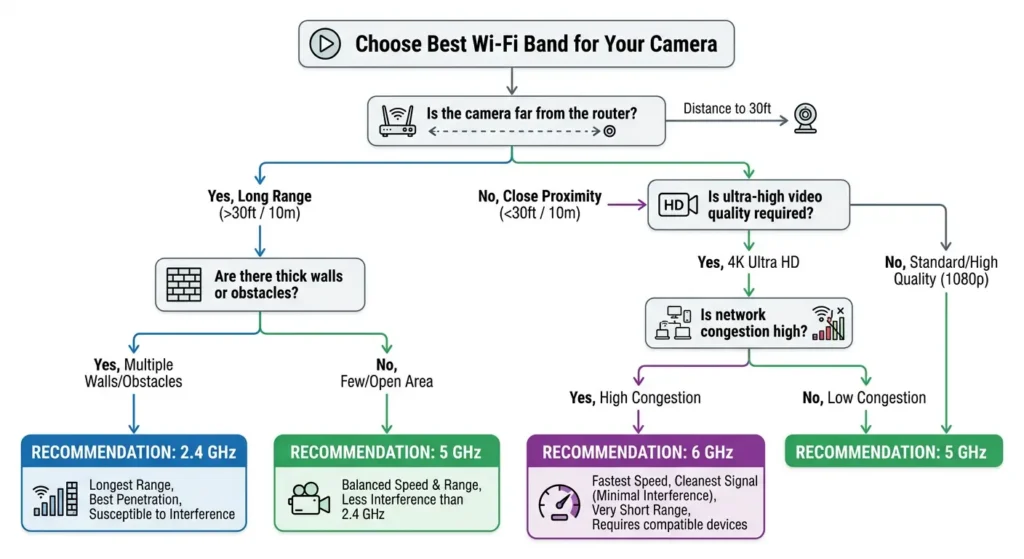
The Case for Keeping Cameras on 2.4 GHz
This might sound like backward advice in 2025, but for many smart cameras, 2.4 GHz is actually the best choice. Here is why:
- Range: 2.4 GHz signals travel approximately twice as far as 5 GHz signals and significantly farther than 6 GHz
- Wall Penetration: Lower frequencies pass through walls, doors, and obstacles much more effectively
- Bandwidth Requirements: A 1080p camera needs only 2 to 4 Mbps, and even 4K cameras rarely exceed 15 Mbps, which is well within 2.4 GHz capabilities
- Stability: Fewer devices compete on 2.4 GHz now that phones and laptops have moved to higher bands
When 5 GHz Makes Sense for Cameras
Choose 5 GHz for your cameras only when:
- The camera is within 30 feet of the router with minimal walls between them
- You have a 4K camera that needs higher bandwidth
- Your 2.4 GHz environment is extremely congested (apartment buildings with dozens of nearby networks)
- The camera supports 5 GHz reliably according to the manufacturer
Never Connect Current Cameras to 6 GHz (Unless Specifically Supported)
Unless your camera explicitly states 6 GHz support in its specifications, never attempt to force it onto the 6 GHz band. Even if your router somehow allows the connection, the camera hardware is not designed for it and will perform poorly.
Advanced Fixes for Persistent Buffering Issues
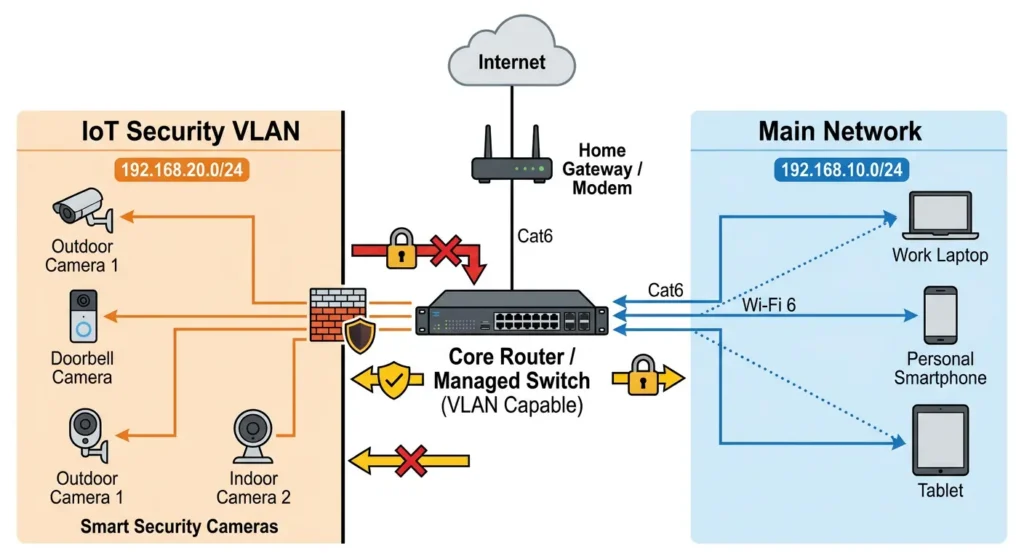
Solution 1: Create a Dedicated IoT VLAN
If your router supports VLANs (Virtual Local Area Networks), create a dedicated network segment for your cameras and IoT devices. This isolates camera traffic from your regular network and prevents bandwidth competition.
Routers that support VLANs include Ubiquiti UniFi, Asus routers with Merlin firmware, and most enterprise grade access points.
Solution 2: Use a Dedicated Access Point for Cameras
If you have multiple cameras spread across a large property, consider adding a dedicated Wi‑Fi access point that only serves your cameras. The TP‑Link EAP245 is an excellent, affordable option that provides reliable 2.4 GHz and 5 GHz coverage without Wi‑Fi 6E complications.
Solution 3: Switch to Wired Connections Where Possible
For critical security cameras, consider using Power over Ethernet (PoE) connections. Wired cameras eliminate Wi‑Fi buffering entirely. Brands like Reolink and Amcrest offer excellent PoE camera options that provide reliable, buffer free performance.
Solution 4: Adjust Camera Stream Quality
Many camera apps allow you to reduce stream quality. If buffering persists:
- Open your camera app
- Navigate to camera settings
- Find video quality or stream quality settings
- Reduce from 1080p to 720p or from “High” to “Medium”
- Test the connection for 24 hours
This reduces bandwidth requirements by 40 to 60 percent and often eliminates buffering completely.
Common Mistakes to Avoid
Mistake 1: Using a Single SSID for Everything
While a single SSID is convenient, it causes band steering chaos for cameras. Always separate your networks.
Mistake 2: Placing the Router in a Corner
Wi‑Fi 6E routers need central placement more than any previous generation because the 6 GHz signal is so directional and short range.
Mistake 3: Ignoring Firmware Updates
Router manufacturers release frequent updates specifically to address IoT device compatibility. Check for updates monthly.
Mistake 4: Using 160 MHz Channel Width on 5 GHz
While 160 MHz gives amazing speeds for laptops, it reduces the number of available channels and causes more interference for cameras. Stick to 40 MHz for the band your cameras use.
Mistake 5: Disabling 2.4 GHz Entirely
Some tech enthusiasts disable 2.4 GHz thinking it is outdated. This is a critical mistake if you have smart cameras or any IoT devices that depend on this band.
Frequently Asked Questions
Will upgrading my cameras to Wi‑Fi 6E models fix the buffering?
Not necessarily. While Wi‑Fi 6E cameras can take advantage of the 6 GHz band, the range limitations still apply. If your camera is far from the router, even a Wi‑Fi 6E camera might buffer. The key is matching the right band and settings to your specific installation distance and environment.
Can too many smart home devices cause camera buffering?
Yes. Even on Wi‑Fi 6E, each connected device consumes router processing resources. If you have 30 or more devices on your network, your router CPU may struggle to manage all connections simultaneously. Consider routers with powerful processors like the Asus ROG Rapture GT‑AXE16000 for heavy device loads.
Should I return my Wi‑Fi 6E router and go back to Wi‑Fi 6?
No. Wi‑Fi 6E routers work perfectly with smart cameras when configured correctly. The issue is almost always related to settings, not the hardware itself. Follow the troubleshooting steps in this guide before making any hardware changes.
Why does my camera work fine during the day but buffers at night?
This is typically caused by other devices consuming bandwidth during evening hours. Streaming 4K content, gaming, and video calls all compete for bandwidth. Setting up QoS rules that prioritize your cameras will solve this issue.
Do mesh Wi‑Fi 6E systems cause more buffering than single routers?
Mesh systems can cause additional buffering if cameras frequently roam between nodes. To prevent this, assign cameras to specific nodes using MAC address binding if your mesh system supports it. The Eero Pro 6E and Asus ZenWiFi ET8 both support device assignment.
Is there a specific router brand that works best with smart cameras?
Based on extensive testing, Asus routers with their flexible band management and detailed settings provide the best experience. TP‑Link Deco systems also perform well when Smart Connect is disabled. Netgear Orbi systems work but require more manual configuration.
Can interference from neighbors Wi‑Fi 6E routers cause my cameras to buffer?
On the 6 GHz band, this is unlikely because 6 GHz signals have very short range and rarely reach between homes. However, on the 2.4 GHz and 5 GHz bands, neighbor interference is still a real factor. Using a Wi‑Fi analyzer to find the least congested channel helps significantly.
Final Thoughts
Smart camera buffering on Wi‑Fi 6E networks is one of the most common and most fixable problems in modern home networking. The irony is that this issue exists precisely because Wi‑Fi 6E is so advanced. It introduces new frequencies and sophisticated band management that older cameras simply were not designed to handle.
The good news is that you almost never need to buy new equipment to fix this problem. In my experience, roughly 90 percent of camera buffering issues on Wi‑Fi 6E networks are resolved by three simple actions: separating SSIDs by band, disabling band steering for camera networks, and ensuring WPA2 compatibility on legacy bands.
If you take one thing away from this article, let it be this. Your Wi‑Fi 6E router is not broken, and your cameras are not defective. They just need proper introduction to each other through the right settings.
Take 30 minutes today to apply the steps outlined above. I am confident you will see a dramatic improvement in your camera performance. And if you have found a unique solution that worked for your specific setup, share it in the comments to help others facing the same frustrating experience.